Careful observation is the key to choosing the right fly — though it is not a guarantee of success. The correct presentation of the fly matters just as much as the pattern itself.
This guide sets out the different fly hatches in chronological order as the season progresses, to make choosing an artificial fly a little easier. It is not an exhaustive list, but a selection of the significant flies that frequent the Kennet and the Dun.
Late April
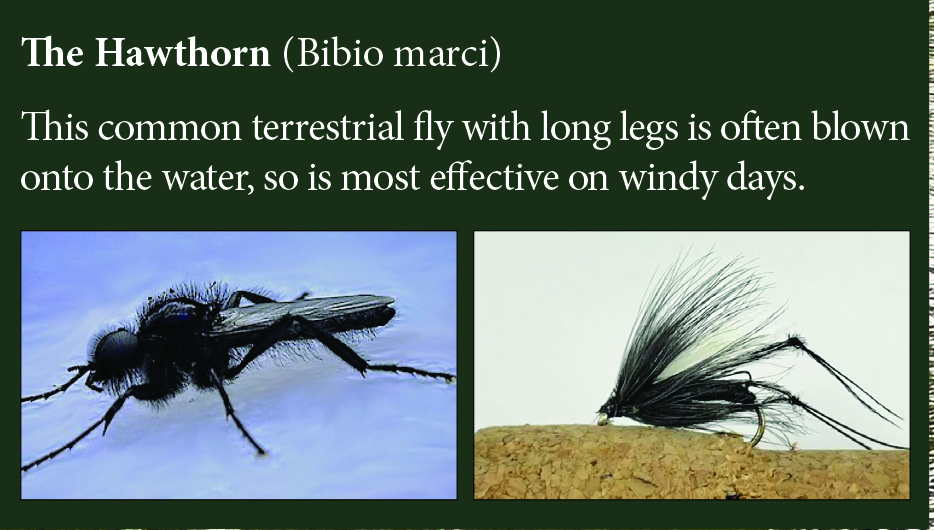
The Hawthorn
Bibio marci
A common terrestrial fly with long dangling legs, often blown onto the water — most effective on windy days.
Early season
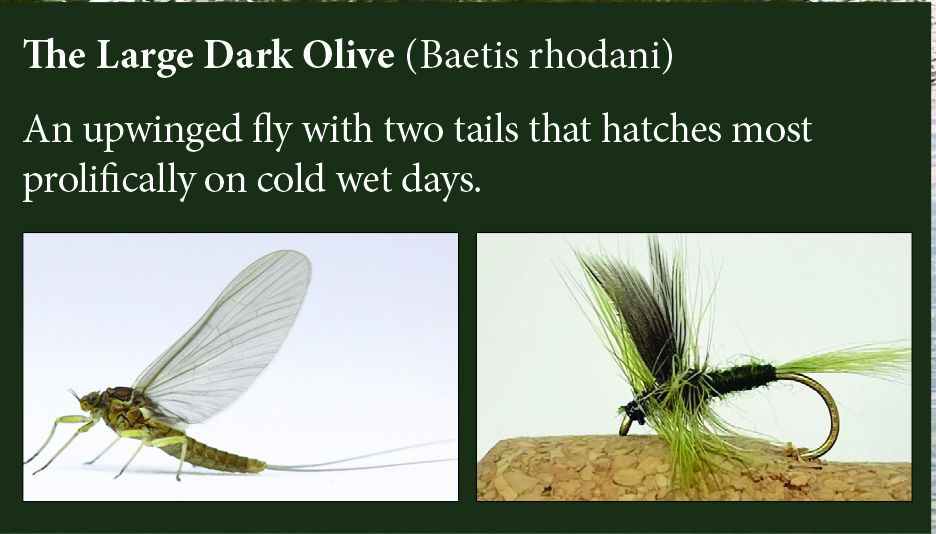
The Large Dark Olive
Baetis rhodani
An upwinged fly with two tails that hatches most prolifically on cold, wet days.
Last week of May – first two weeks of June
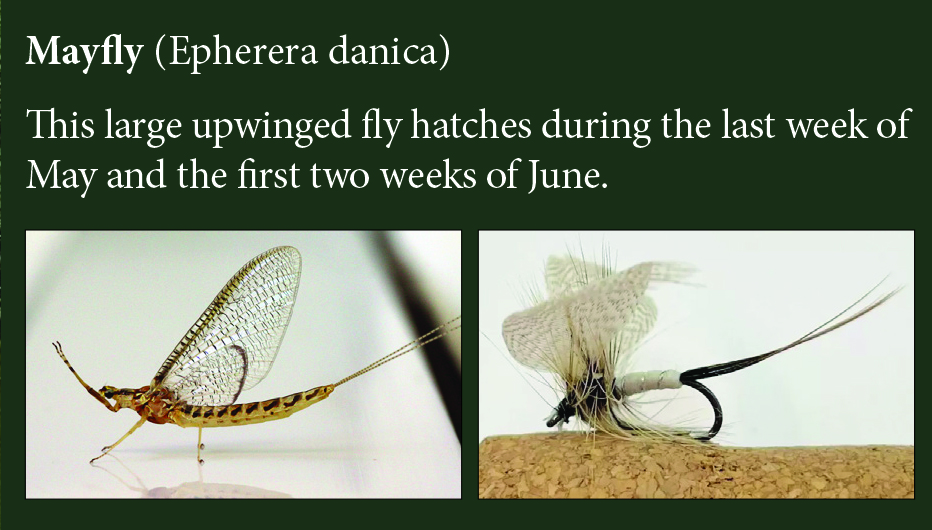
The Mayfly
Ephemera danica
The large upwinged fly the whole season builds towards. Unmistakable on the water once it starts.
Through the summer months
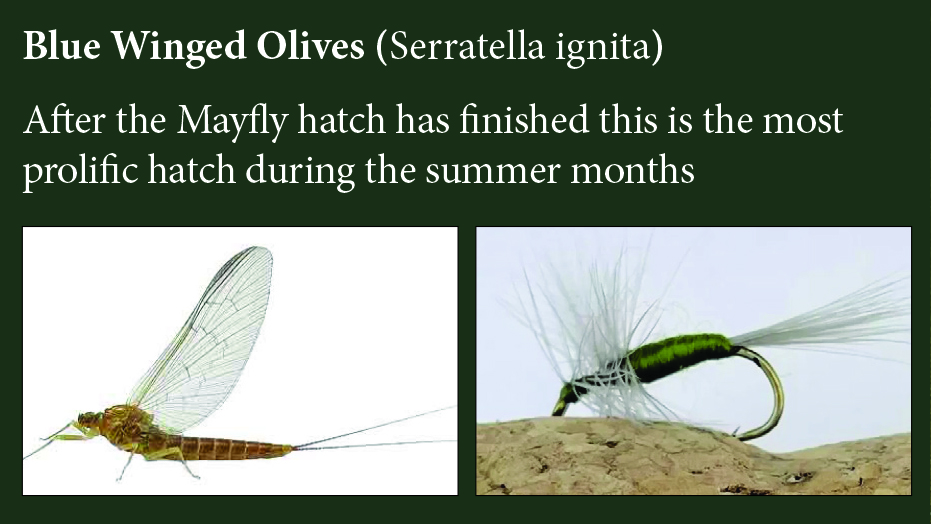
The Blue Winged Olive
Serratella ignita
The most prolific hatch once the Mayfly has finished — the fly behind the classic summer evening rise.
September
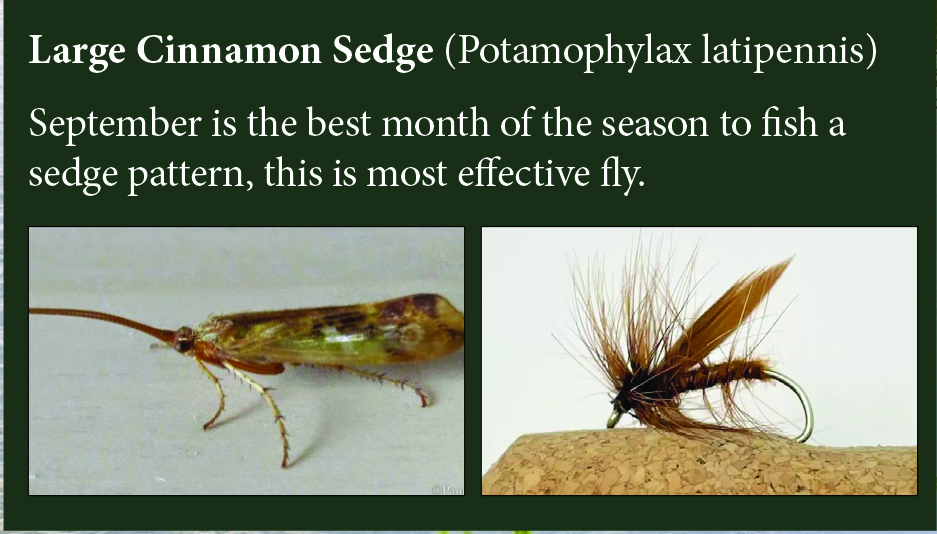
The Large Cinnamon Sedge
Potamophylax latipennis
The best month of the season to fish a sedge pattern, and this is the most effective one.
“Fly hatches are fickle things, dictated by time of year, time of day, water temperature, atmospheric conditions and dissolved oxygen levels — please feel free to ask for guidance, as hatches can change very quickly.”
— Robert Knight-Starr, Water Keeper