

Freestone · Sandstone Shale · Tuscany / Casentino (Pratovecchio Stia, Province of Arezzo)

Arno (Casentino)

Arno (Casentino) terrain map

The Arno you know from postcards is a slow green giant sliding under the Ponte Vecchio, but up here, a few kilometres from its source on Monte Falterona, it hasn't decided yet what kind of river it wants to be.

Poor · Brown Trout
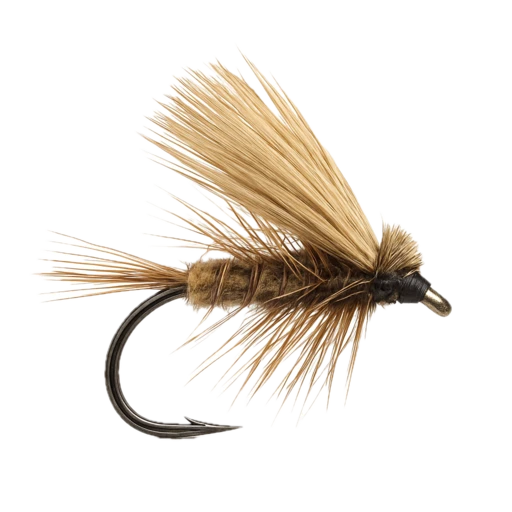
Elk Hair Caddis · 12-16
Poorlive now
Not the day for it
River temperature is the limiting factor today, not the flow. This is not the day to push it. Check the thermal advice above before you head out.
90% confidence
What moved it
  • Level1.19 mLast reading 8h ago
  • Water temp22.2°C
  • ClarityClear
Today's fly
Elk Hair Caddis
Elk Hair Caddis12-16
Upstream dry, on top
Conditions on the water
Live gauge
Level
Steady
1.19 m
Last reading 8h ago
Water temp22.2°C
ClarityClear
Weather30°C
WindNE 12 km/h
Pressure1021 hPa
Rain · recent0.0 mm
Rain · ahead0.0 mm

Live readings only. Trends shown where the gauge supports them.

Water temperature for Brown Trout
Warm — slow
22.2°Cideal 1016°C
0°14°28°
How to fish it · for Brown Trout
When
Spring (April-June) brings the best hatches once the Casentino runoff settles; autumn into the reserve's December closure fishes well too, once the summer crowds thin. Midsummer heat can shut the no-kill water down by midday — mornings and evenings are more reliable.
Where
Broken pocket water and riffled runs through the stretch above Stia; slower glides and pool tails as the river opens out toward Pratovecchio. The no-kill water above the SP310 bridge at Tintoria holds the better fish.
Method
Upstream nymph or dry-dropper through the broken water; switch to a small dry over risers in the calmer glides. Single barbless hook mandatory throughout the reserve, and the upper stretch is release-only regardless of size.
Kit
8.5 to 9 ft #3/4 rod for this scale of water. Floating line, 9-12 ft leader to 5X-6X. Small Perdigóns and Pheasant Tails do the subsurface work; carry CDC duns and a Klinkhåmer for the hatch.
Why this works
Water at 22.2°C. This is the line where catch-and-release kills brown trout. Do not fish for them today.
Hatch timeline · todayQuiet day

Hatch predictions

Today's headline hatch shown — see all 2 active hatches hour by hour with Pro.

Start free trial

14-day free trial. Cancel anytime.

Sub-surface · on the nymphunder the surface

Hatch predictions

See the full sub-surface read with Pro.

Start free trial

14-day free trial. Cancel anytime.

Beyond the hatch · worth watchingambient prey

Hatch predictions

Top prey shown — see all 2 with Pro.

Start free trial

14-day free trial. Cancel anytime.

Evidence
Survey-backed · regionalModerate confidence

Backed by regional invertebrate surveys; no sampling on this exact reach yet.

Through the year
0–3 scale · August highlighted
J
F
M
A
M
J
J
A
S
O
N
D
GrannomHatch
2
2
Evening SedgeHatch
2
3
3
3
2
Large Dark OliveHatch
1
2
2
1
Iron BlueHatch
1
2
2
1

Numbers are intensity 0 (none) to 3 (peak) — a guide, not a guarantee.

Ranked for today
Brown Trout fly box

A fuller Italian trout and grayling box for the southern Alps and northern limestone/alpine systems. It keeps the marble-trout streamer accent, but adds proper grayling dries and bugs, competition nymphs, caddis/olive work, terrestrials, pocket-water dries and alpine lake patterns.

FC
Foam Caddis / Sedge Hog
12-16 · Pattern
Upstream dry, on top
Gammarus Scud (Olive)
12-16 · Gammarus Scud
Dead-drift, sub-surface
SS
Small Streamer
6-10 · Pattern
Swing, sub-surface
Permits & access
Permit required — see local rules.
  • Regional Tuscany fishing licence (licenza di pesca dilettantistica, type B annual or type C fortnightly) required, plus the separate ZRS Capodarno daily permit (max €30, cap 40 anglers/day)
  • No-kill zone: single barbless hook, artificial lures only, immediate release
  • Controlled-harvest zone allows 3 salmonids/day, minimum 25cm.
What's coming
Plan ahead
5-day outlook
Cooler water nearby · 1
Water here at 22.2°C — too warm to fish Brown Trout safely. These are cooler.
About this water

The Arno you know from postcards is a slow green giant sliding under the Ponte Vecchio, but up here, a few kilometres from its source on Monte Falterona, it hasn't decided yet what kind of river it wants to be. Capo d'Arno rises inside the Foreste Casentinesi, and by the time it reaches Pratovecchio and Stia it's still dropping fast enough to earn the description carattere torrentizio — a proper torrent, rock-strewn and impatient, nothing like the water two hundred kilometres downstream. The ZRS Capodarno reserve covers five kilometres of it: the upper stretch strictly no-kill, the lower stretch a modest catch-and-keep water, both set in macigno sandstone country that keeps the water clean and cold. Genetic surveys inside the national park have found trout here carrying real Apennine ancestry, unmuddied by the hatchery stocking that blurred so many Italian rivers over the last century — reason enough to handle every fish as though it matters, because on this stretch it probably does.

  • Sandstone shale
The full read · show the working · for Brown Trout · confidence 90%
How the 10 is built — score × weight = contribution
Temperature5 × 28%1.4
Flow80 × 22%17.6
Clarity95 × 18%17.1
Feeding Time70 × 13%9.1
Pressure80 × 7%5.6
Insect activity61 × 12%7.3
Limiting factor: Water temperature (22.2°C) is outside Brown Trout's preferred range (10–16°C)= 58
Can you trust it?
Water temperaturelive gauge readinggauge
Level / flowon-river gaugeobserved
Prey activitysurvey-backed invertebrate datasurvey
What would change the calculation
Cooler water — back toward the 10–16 °C ideal band — would lift the score and ease welfare.
Directions
Seasons & zones
  • Trout 2026-02-222026-12-31
Related guides
Booking & contacts