

Freestone · Granite Schist · Valle d'Aosta

Dora Baltea (No-Kill, Chambave-Verrayes)

Dora Baltea (No-Kill, Chambave-Verrayes) terrain map

The Dora Baltea gathers itself from glaciers under Mont Blanc and Monte Rosa, and by the time it reaches the middle valley below Aosta it has become a proper river — wide, deceptively even-paced, the kind of water that looks straightforward until you've waded a hundred yards of it.

Poor · Brown Trout
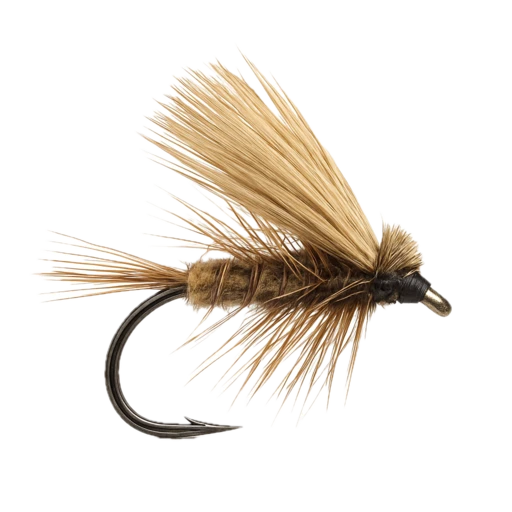
Elk Hair Caddis · 12-16
Poorlive now
Not the day for it
River temperature is the limiting factor today, not the flow. This is not the day to push it. Check the thermal advice above before you head out.
90% confidence
What moved it
  • Level0.11 mLast reading 22h ago
  • Water temp33.2°C
  • ClarityClear
Today's fly
Elk Hair Caddis
Elk Hair Caddis12-16
Upstream dry, on top
Conditions on the water
Live gauge
Level
Steady
0.11 m
Last reading 22h ago
Water temp33.2°C
ClarityClear
Weather25°C
WindW 6 km/h
Pressure1026 hPa
Rain · recent1.5 mm
Rain · ahead3.9 mm

Live readings only. Trends shown where the gauge supports them.

Water temperature for Brown Trout
Welfare risk
33.2°Cideal 1016°C
0°14°28°
How to fish it · for Brown Trout
When
Spring and autumn keep the water honest. Summer afternoons turn the Dora Baltea milky with Mont Blanc and Monte Rosa snowmelt and the fish go off it — mornings hold up far better. The reserve runs 29 March to 14 October, closed Tuesdays and Fridays.
Where
Current seams over the sand-and-bedrock-sill bed, and the softer water tight against the bank where the flow eases. The Chambave-Verrayes reach has enough structure to hold fish along its full nine and a half kilometres.
Method
Barbless single hook, maximum three flies — nymph the seams, dry fly when things settle in the margins. Everything goes back regardless of size.
Kit
9 to 10 ft #4/5 for a bigger freestone river. Floating line, 12 ft leader to 5 lb fluoro.
Why this works
Water at 33.2°C. This is the line where catch-and-release kills brown trout. Do not fish for them today.
Likely species
Mayflies
  • Blue-winged oliveMost likely
    #16–18 · Dun
    Duns are up; a sherry spinner fall may follow.
  • Large dark oliveAlso possible
    #14–16 · Emerger
    Dead-drift the emerger — it's sitting in the film.
Caddisflies
  • Net-spinning caddis (S. Europe)Most likelyLower confidence
    #12–14–16 · Pupa
    Widespread riffle net-spinner; evening emergence.
  • Satin sedgeAlso possibleLower confidence
    #12–14 · Egg-laying
    Skitter it at dusk — this one's fished, not dead-drifted.
Beyond the hatch · worth watchingambient prey

Hatch predictions

See what else is on the menu with Pro.

Start free trial

14-day free trial. Cancel anytime.

Through the year
0–3 scale · August highlighted
J
F
M
A
M
J
J
A
S
O
N
D
Large Dark OliveHatch
1
2
2
1
Blue Winged OliveHatch
1
2
2
2
2
1
Autumn OliveHatch
1
2
1
GrannomHatch
1
1

Numbers are intensity 0 (none) to 3 (peak) — a guide, not a guarantee.

Ranked for today
Brown Trout fly box

A fuller Italian trout and grayling box for the southern Alps and northern limestone/alpine systems. It keeps the marble-trout streamer accent, but adds proper grayling dries and bugs, competition nymphs, caddis/olive work, terrestrials, pocket-water dries and alpine lake patterns.

FC
Foam Caddis / Sedge Hog
12-16 · Pattern
Upstream dry, on top
Permits & access
Permit required — see local rules.
  • No-kill reserve — mandatory catch-and-release, barbless single hook, maximum three flies
  • Daily no-kill permit required, purchased through the Consorzio Pesca Valle d'Aosta.
What's coming
Plan ahead
5-day outlook
Cooler water nearby · 1
Water here at 33.2°C — too warm to fish Brown Trout safely. These are cooler.
About this water

The Dora Baltea gathers itself from glaciers under Mont Blanc and Monte Rosa, and by the time it reaches the middle valley below Aosta it has become a proper river — wide, deceptively even-paced, the kind of water that looks straightforward until you've waded a hundred yards of it. The no-kill reach through Chambave, Fenis, Nus, Saint Marcel and Verrayes runs for about nine and a half kilometres over a bed of sand and bedrock sills, and it holds the valley's best case for wild trout: brown trout and native marble trout share the deeper glides here, with grayling present on the wider river system. A long-running tagging study follows both trout species through this water, which tells you something about how seriously it's taken. Everything goes back — barbless hooks, three flies maximum, catch and release non-negotiable. The river runs milky with glacial melt through high-summer afternoons; fish it early, or wait for the settled water of autumn.

  • Granite schist
The full read · show the working · for Brown Trout · confidence 90%
How the 0 is built — score × weight = contribution
Temperature0 × 28%0.0
Flow80 × 22%17.6
Clarity95 × 18%17.1
Feeding Time80 × 13%10.4
Pressure80 × 7%5.6
Insect activity60 × 12%7.2
Limiting factor: Water temperature (33.2°C) is outside Brown Trout's preferred range (10–16°C)= 58
Can you trust it?
Water temperaturelive gauge readinggauge
Level / flowon-river gaugeobserved
What would change the calculation
Cooler water — back toward the 10–16 °C ideal band — would lift the score and ease welfare.
Directions
Seasons & zones
  • Trout 2026-03-292026-10-14
  • Grayling 2026-03-292026-10-14

    All grayling must be returned — retention is prohibited here.

  • Marble trout 2026-03-292026-10-14
Related guides
Booking & contacts